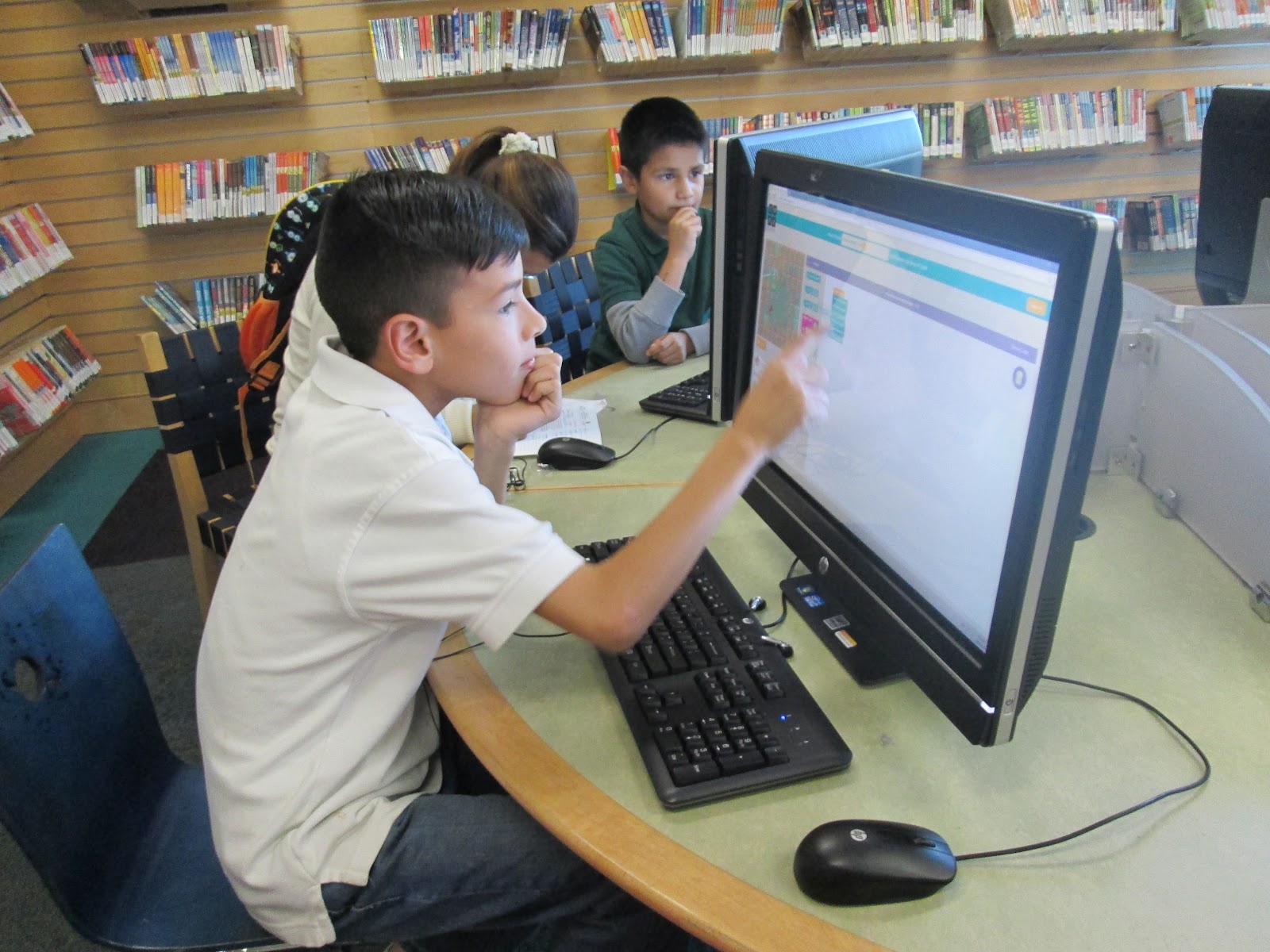
We might think that teaching coding is something boring and complicated. But when you base your exercises on games (you gamecodize :-D) then… your students get astonished!
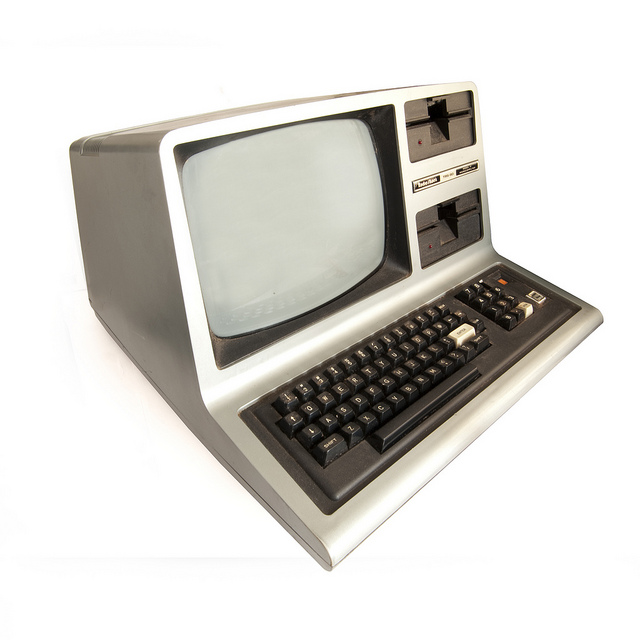 Introducing a new subject can be threatening for some people. Things get worse for those students not in favour of STEM matters.Then, how to make them buy your fabulous lessons about coding? Act as an illusionist.
First of all switch your digital board and open your IDE (I’ve used Basic256). Start speaking about video games: how long they think a game needs to be coded, types of games, etc. Let them express themselves about the topic.
Then start to explain what Tron is: a film by Disney which gave way to several games. Let them go on speaking about different aspects of the game while you start typing code. For sure you’ll listen to the silence (students suddenly shut up hypnotized by what you are doing) as you go on striking your keyboard, but break it to explain what you are doing and how (different aspects of coding, as main loops, debugging, variables, strategies, etc).
Some tips:
Use the help window: they should realize they don’t need to know everything by heart. If doubts pop up a helping window can also pop up.
Make some mistakes on purpose: that’ll give them a good view of what debuging and trial-and-error are.
Show some hesitation and use the expression “let’s try…”
Use a scaffolding approach, constructing the main algorithm, and adding new elements around it as you continue.
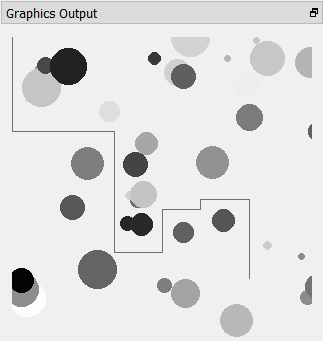
My basic version of Tron game needs about 10 minutes top to be coded. When you execute the final code and the students see the results they get way surprised by how easily you can make games.
The coding phases go like this:
Create a main loop and listen to the keyboard. If ESC is pressed exit the loop.
Insert the code for the motorbike (a point) to go down the screen when pressing the down arrow.
Do the same for the rest of the keys.
Move the point around, with no physical restraints.
Make the algorithm detect the walls left by the point, and make them “real”.
Let the player win when getting to the bottom right corner.
Add random spheres as obstacles.
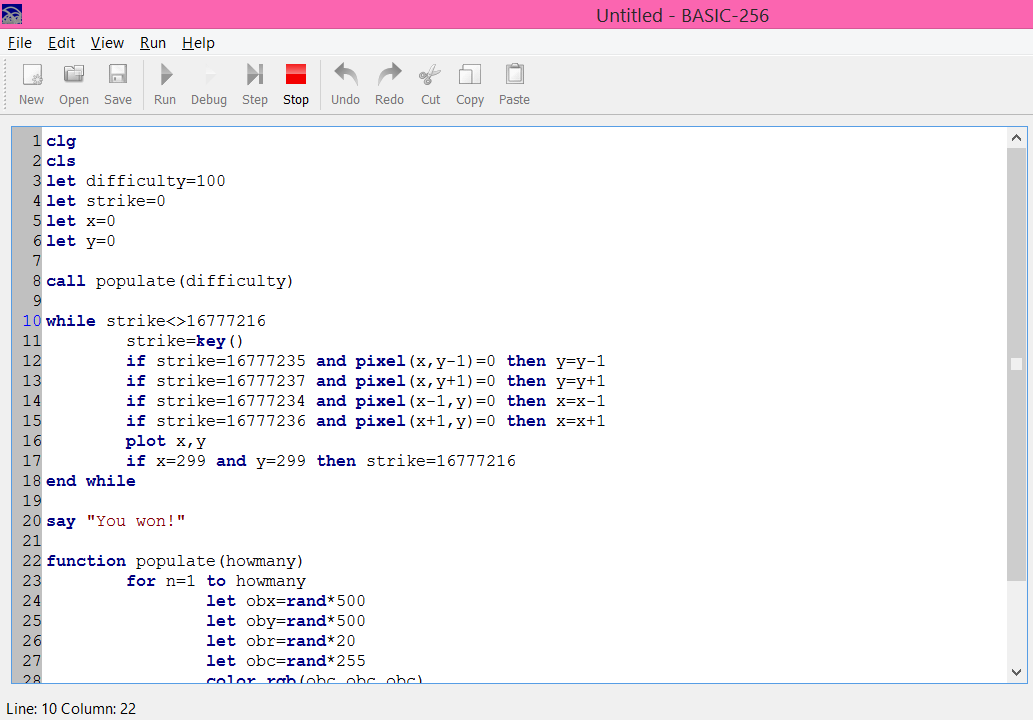
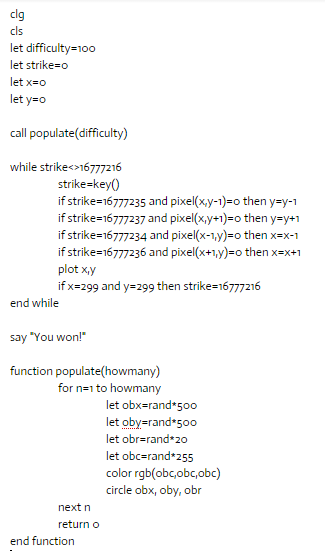
The lines of code look like this:
For more ideas about what games to code check the following list. MVC stands for model/view/controller, and AI for artificial intelligence. The grades have been given taking in count: that a student has to code them, and Basic’s features.
|
Difficulty
|
Text/graphic
|
MVC
|
Sprites
|
Data
|
AI
|
Animal, vegetable,
|
difficult
|
text
|
yes
|
no
|
matrix
|
basic
|
Arcanoid
|
difficult
|
graphic
|
yes
|
yes
|
matrix
|
no
|
Asteroids
|
medium
|
graphic
|
no
|
yes
|
array
|
no
|
Battleship
|
medium
|
both
|
no
|
no
|
matrix
|
no
|
Bejeweled
|
difficult
|
both
|
yes
|
yes
|
matrix
|
no
|
Biggest card
|
easy
|
both
|
no
|
no
|
array
|
no
|
Checkers
|
difficult
|
both
|
yes
|
no
|
matrix
|
yes
|
Connect four
|
medium
|
both
|
yes
|
no
|
matrix
|
yes
|
Conversation
|
easy
|
text
|
no
|
no
|
variable
|
no
|
Dodger
|
easy
|
graphic
|
no
|
yes
|
array
|
no
|
Escape the maze
|
easy
|
graphic
|
both
|
both
|
matrix
|
no
|
Guess the number
|
easy
|
text
|
no
|
no
|
variable
|
basic
|
Hang man
|
medium
|
both
|
no
|
no
|
array
|
no
|
Land on the moon
|
medium
|
graphic
|
no
|
yes
|
variable
|
no
|
Life's game
|
medium
|
graphic
|
yes
|
no
|
matrix
|
no
|
Marble, chips...
|
easy
|
text
|
no
|
no
|
variable
|
no
|
Master mind
|
medium
|
text
|
no
|
no
|
array
|
no
|
Math sequences
|
medium
|
text
|
no
|
no
|
array
|
no
|
Poker
|
medium
|
both
|
yes
|
no
|
matrix
|
medium
|
Pong
|
medium
|
graphic
|
no
|
yes
|
variable
|
no
|
Puzzle: match pairs
|
easy
|
both
|
yes
|
yes
|
matrix
|
no
|
Puzzle: sliding
|
medium
|
both
|
yes
|
yes
|
matrix
|
no
|
Simon says
|
easy
|
both
|
yes
|
no
|
array
|
no
|
Snake
|
difficult
|
graphic
|
yes
|
yes
|
matrix
|
no
|
Space invaders
|
difficult
|
graphic
|
no
|
yes
|
array
|
no
|
Text adventure
|
medium
|
text
|
yes
|
no
|
matrix
|
no
|
Three in a row
|
medium
|
both
|
yes
|
no
|
matrix
|
medium
|
Tic-tac-toe
|
easy
|
both
|
yes
|
no
|
matrix
|
basic
|
Tron
|
easy
|
graphic
|
no
|
no
|
variable
|
no
|